Sunday, November 22, 2009

Four Band Shirts I Would Totally Not Regret For That Long

Ah, band shirts: the one thing that, almost always, ends up being a bad idea. Even those of us who are nothing but fans of said bands, spending $20 at a show for a t-shirt that will eventually make you look like either an idiot or a snob (depending on how soon the band appears on the CW) always comes back to haunt us; after a while they are relegated to painting or cleaning clothing. Sometimes they become rags, or garage sale fodder.

However, after talking to a friend about getting band shirts for her younger brother for Christmas, I put some thought into it: are there any shirts that would tempt me at the show to throw away hard-earned money for intoxicants so that I can cover my body? Yes. There are four. That's it.

1. Octopus Shirt
Band: Okkervil River
Well, it is Okkervil River, and they are one band that I will get all dorky over. The design is both interesting and ridiculously indie, and was designed by William Schaff, who designed most of Okkervil River's covers.


2. Wolf Trap Shirt
Band: Beep Beep


Beep Beep was a band that I listened to when I was going through a phase of only listening to Saddle Creek, which led me to some good things (The Faint, Azure Ray) and some not good things (Cursive). Beep Beep, whose music I cannot find on my iTunes, were fun and bouncy, and I always wanted this shirt whenever I saw it online. It is so cute and also so gross lookin'! Coyote Ugly! The only downside is that this is one of those shirts that has nothing to do with the band itself, unless they are referring that either they are the type of band that would bite off their leg to escape a trap, or if one ought to react in such a way while listening to Beep Beep.

3. Ribbon Shirt
Band: Gogol Bordello


I was at the Gogol Bordello afterparty a couple weeks ago, and it was ten types of fantastic, and one guy from the band's entourage burned me with a cigarette accidentally and kissed where he did. He was wearing this shirt. I should not have to explain why this shirt is great.

4. Sphinx Shirt
Band: Neko Case
"I listened in when you thought you were alone / calling the sphinx on a tornado's phone" These lyrics, from "The Pharaohs" (a track on the wonderful Middle Cyclone) make no sense. They are pretty, and in the context of the song you sort of get it, but whereas the Gogol Bordello shirt was a reference to a song title, this one is not only harder to follow, but the payoff might not make bullions of sense. Me, though? I think it's hilarious. And clever. And I love it. Also, the fabric is apparently thinner and more washed looking, instead of the typical American Apparel fabric. Of all four of these, I would take this shirt overall.

Just some food for thought. My birthday is in a week!

Saturday, November 21, 2009

In which I stick my nose


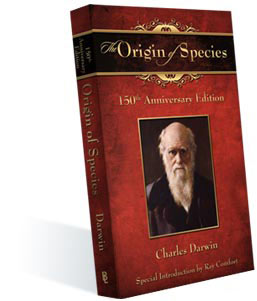
Okay, so Creationists are taking copies of Darwin's Origin of Species and passing it out to college students, with an added introduction that alleges Darwin as a racist, sexist, and the origin of Nazi ideology. I hate sticking my nose into these things, but should people who believe in evolution pass out copies of scripture with a foreward that sites all the crimes done in the name of Christianity? No. Because that would be missing the point of Christianity, just as Creationists are missing the point of Evolution.

I am not one to delve into the God question, I see myself as a Humanist, Agnostic, however you'd like to say it. The fact is that, if there is a God, I don't have any beef with them, and I have a feeling that She or He (or It, really) would be of a high and wise enough mind to place damnation on a level somewhere a bit higher than what we do and don't read. Censoring yourself from every possible outlet of information in this world is just as damning as watching pornography. The world is big and complicated, you can't root things out between Sin and Virtue. But these ideals are not, I think, sent down to us from a higher power. We see something that offends us, we call it wrong. Something makes us happy, we deem it right. eventually enough people see one thing as wrong or one thing as right that we assume it a universal truth. The Ten Commandments are a perfect example of this.

And don't think that I am only coming out against Christian Fundamentalism; I get just as irritated by Atheistic Fundamentalism, that teenage stubbornness where one refuses to read scripture or take any heed from it, and who assume that anyone–and anything–involved with the practice of religion is a result of boorish stupidity. I have read scripture, I have prayed, I have been to church. I have said grace at the table at Thanksgiving. And at no point did I feel that I was being simple or stupid, or oppressed. There are things to be found in faith that Atheism will never provide; and there are emotions that Atheism cannot explain. Is it possible, really, for me to look at Mount Ranier when I'm driving north and not have a fleeting thought of "Whoever made that is a damned good artist"? Or to know someone has died and not pray, secretly, quietly to myself, that they are in a better place?

Atheism rejects our human need for faith, for the belief in something greater than ourselves. This was not always the sky-cult of Judeo-Christian belief. Before that, it was the Earth and the deities that were wrought from it. But it has always been something; we always need a cosmogonic myth and we balance it with an apocalyptic myth. Science, with the Big Bang and the Universe's endless expansion and semi-predictable chaos, is another form of myth, though I will not say that it is false. All myths are true in their own way, all myths are useful. Science has proven to be one of the most useful because it denies that it is infalliable; its laws are subject to change upon each new discovery. I trust science to explain the workings of my world, and I admit (as most scientists do) that it does not explain everything.

Humans, when we get down to our core, are too complicated to accept a single explaination for the way things are. Only following a single doctrine, then, is going against what being human is. We did not fall from grace out of the blue. We got curious. But if it weren't for that curiosity (to use a Biblical metaphor), there would be nothing more than two naked people sitting in a garden naming animals. And I, for one, think that Original Sin did us a world of good.

So, back to the issue at hand: distributing copies of The Origin of Species explaining that, despite laying the foundation for modern Biology, Paleontology, and a host of other disciplines, gave Hitler a good reason for Genocide. Not only are these allegations false, but they go against everything that academia tries to promote. If these ladies and gentlemen (amongst whom is former Tiger Beat cover boy Kirk Cameron) really want to break into the academic world and make Creation level with Evolution in classrooms everywhere, they could start by promoting something that is less sensationalist and more guided by reason and willingly open for debate. Also, you have to remember that, though it is the basis for so much scientific study, it has always been called the Theory of Evolution, not the Indisputable Fact of Evolution. If Creation is to be taught, then it, too, must be posed as a theory, therefore negating its very purpose in the eyes of those who promote it so intensely. Academic institutions are places of debate and discourse, and therefore could never really promote fundamentalism in the classroom. Calling one of the most influential academics of all time a liar based on false accusations of racism is just childish.

I read a small portion of Sarah Palin's new book in a review of it online, where she says that she can't look at everything people have done and think that they were once fish crawling out of the ocean. We've heard that argument before; the assumption that Evolution is an insult to humanity since it infers that we are descended from monkeys and fish and not borne directly from the mind of the Almighty. Hogwash, I say. There's something, to me, that's even more beautiful about the idea of us, out of the billions of possible organisms, somehow changing and evolving, turning a simple backbone into a spine and a few electronic pulses into the most complex brain that's ever been known, to go from floating to swimming to crawling to walking upright when no other species really could, to grow hands for building and turn small families into civilizations, surviving mass extinctions throughout millions of years, until we reached the point where we could dream up hundreds of possibilities for our own origins and millions of hopes for our own future–is that not, Ms. Palin, the ultimate underdog story? Is Homo Sapiens not a cunning and wise and adaptive survivor? Have we not proven ourselves worthy of the Gods we create and hold fast to?

There is nothing to be ashamed of in the idea of once being small. Everything was once small, even in Genisis, there was chaos from which light and life was created. We are above throwing stones into the gears of other's ideas, and the only way to continue to evolve as a society is to allow free thought, as well as freedom of worship. But please, let's do it in an arena where we can at least be courteous to one another.

Monday, November 9, 2009

Because, really, I can't pick just one.


In the Spring of 2008, while living in the literal ass of England, my two best friends and I went on an adventure through France, Germany, and Vienna. Being the people that we are, we said some pretty ridiculous things. Here, thanks to Amanda's diligent recording, is the cream of the crop of words that came out of our mouths that fateful few weeks:


"It's all the New Kids on the Block in ONE GERMAN MAN!"

"Ahahahaha.........We're poor and sad."

"I can't remember who I'm sleeping with... oh wait, NOBODY."

"Good old patch-knees. Rawwhh!"

"Ssssir it's not hot enough in the hot tub...?"

"Vehre you guys just flashing zeh towns? Get your feet off zeh seat und stop flashing your tits."

"Well, what are you gonna do?"
"Pssh...Fuck a tree, apparantly."

"Get on the bus, douche. We're in hell."

"We got trouble! Right here in Nurnburg City! With a capital N and that rhymes with BEN and that stands for GETBACKHERE!"

"Danke....................
.....................................................................................................................schoen...?"

"God I love these ghetto fabulous Germans!"

"Hilton says 'no' to everything except being rich."

"Where is the key-"
"It's in my butt."

"How am I taking this badly? you're the one who put it up your butt."

"Ok It's an hour and 15 minutes until the next traaeeiighhhhhhch."

"You have good eyes, Meg. They're big and awesome."

"He's probably a perfectly nice guy, and here we are saying he's a dangerous muppet James Spader Javier Bardem."

"Oh shit, it's Napoleon."

"What is it?"
"Pshh, I don't know, gigantic?"


"...............SUGAR!!!!"

"Why don't you restock your cart before you come on this train and sell your wares!?!?!?!"

Saturday, October 24, 2009

Quick Reviews


I was a dick about my Summer Reading Reviews that I planned. I'm sorry, blog. Here's what I've read and finished since my last update (in no particular order):

Alice Sebold, The Lovely Bones
Sebold's debut novel, which a few years ago was the IT book, stayed far from my radar for a long while. The reason is this: when I was in high school, I saw at least six girls do terrible dramatic re-enactments of the book's first chapter, which describes the rape and murder of the 14-year old narrator, Susie Salmon. Rape is a tough thing to read and to watch, not because it's a horrifying subject (it always is), but because sometimes it's just so poorly done. Sebold, to her credit, writes it with enough balance between description and discretion to not make me throw the book across the room. The rest of the novel deals with Susie's friends and family attempting to cope with the aftermath of her murder; their attempts to find her killer, her family falling apart, and Susie's adjustment to her new heaven, where she watches helplessly, and often joyfully, time pass for those she left behind. Sebold's greatest gift in this novel is a damn good narrative voice. Her Susie is sweet and tragic, loving and regretful, and it is her feelings towards her family that carries the greatest feeling, more so than what her family actually experiences. I was disappointed in the secondary characters in the novel, the rest of the Salmon family and a few more of Susie's friends, as well as her killer; they are convincing but never seem to flesh out or develop; the third act of the book was almost boring for me. Once again, it seems, I picked up the novel that everyone and their mother raved about, and was disappointed. Damn my Bachelor's degree.


Mikhail Bulgakov, The Master and Margarita

Now THIS is more like it! Check it out: in Soviet Moscow, the Devil and his companions (a naked girl, a hunchback, a man in a checkered suit and a giant talking cat) pay a visit to wreak a little havok. Bulgakov's take on the Faustus myth is darkly funny and compellingly intelligent; not for the weak of mind but oh so worth it. With reckless abandon, the Devil causes a fair amount of death and destruction so that he might throw a good party, and saves the love of the titular Master and Margarita, an impovershed writer whose manuscript on the religious figure of Pontius Pilate has been destroyed, and the woman who willingly gives her soul to be with him. The novel not only deals with religion in a unique and arguably perfect way, but criticizes a society that refuses to accept the existence of either God or the Devil. Oh, and the cat's name is Behemoth, and he loves shooting things.


Ralph Ellison, Invisible Man

I feel like I can't write that much about this novel, only because it would be too difficult. Invisible Man is dense, no doubt, but that does not mean that it is impossible. Ellison has crafted a sort of African-American Ulysses, a voyage from the impoverished South to the well-to-do yet hypocritical University and finally to the bustling world of 1920s-1930s Harlem. Ellison's nameless narrator seeks his identity through them all, finally settling on being, more or less, the titular Invisible Man. Though a strong and powerful criticism of American racism, Ellison's prose wanders so often into the experimental that one forgets to think in terms of political statements and instead delves into the allegorical factors surrounding race and the way we see each other, the hypocrisy inherent in all people, and the overwhelming and never answered question of the human condition. If there really is a greatest American Novel ever written, this must be close to #1.


H.P. Lovecraft, At The Mountains of Madness

Lovecraft's weird fiction has avoided me for some time, and finally I got around to it, picking up "The Call of Cthulu" as well as some other stories, one being his novel, At The Mountains of Madness. The story follows an Antarctic expedition that stumbles upon the ruins of an ancient inhuman civilization that inexplicably causes the deaths of several members of the crew. Lovecraft's gift is for horror, and unfortunately it does not shine here as it does in stories like "The Call of Cthulu" or "The Colour of Outer Space". Though the civilization that Lovecraft creates and describes is well-formed in the prose, the narrative delves too much into scientific musings pertaining to geological history or mathematical distance, and there are too many moments where Lovecraft tries to build suspense, but eventually is just tiring. How often can you almost describe something, and then say "but I am too afraid to speak of it!" We know you're going to. There's no way that you won't. Also, the novel is missing that Lovecraftian sense of doom, where mankind is unable to cope with the scale of the unknown universe, that nihilistic sensibility that really makes for the best sort of horror.


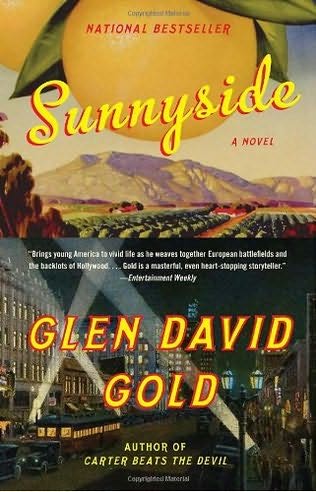
Glen David Gold, Sunnyside

Ah yes, Sunnyside. I loved Carter Beats the Devil, Gold's first novel, and his follow-up was about Charlie Chaplin and the beginnings of Hollywood, so you know I would be on board. Gold is far more ambitious with this novel, he does not only follow Charlie Chaplin, but others as well, notably two men who seem to have little to nothing to do with Hollywood at all. The stories all revolve around the First World War, in and out of the trenches. Gold's Chaplin is a man filled with both ambition and indecision, full of love and a good touch of self-pity. Chaplin's motivations are sometimes hard to figure, but I'm just along for the ride, and Gold's prose is practically sparkling. Be warned, though: just because it's about Charlie Chaplin doesn't mean that it's all fun and games. But anyone who's seen Chaplin's better films – The Kid, City Lights, Modern Times – knows that humor is to be found in tragic circumstances, in fact, it must be found in order to survive. Gold's novel, then, is much like life itself: sometimes funny, often tragic, but mostly beautiful and, really, always worth it.

Friday, October 23, 2009

Generically speaking


I've been writing for a long time. Not professionally, since I still feel unprepared for that, but even so, I've been making up stories for as long as I could think, and when I was in second grade I had an assignment to write about sailors and pirates, and I wrote about a girl who dressed up as a boy so she could be on a ship and run away from home. I never finished the story, thinking that it was going to be a novel, which is for the best, I suppose. Turns out that around the same time, Neil Gaiman had written Sandman #53, which was of a similar theme, only infinitely better written. Though I've always had dreams of being a performer onstage, writing has always called back to me; and I've realized that my mission in life is to spin stories, since it's the only thing that I'm really good at doing. Whether that makes me good on a broader spectrum remains to be seen.

But what to write? In every artistic profession, it makes sense to be well-versed in all genres and forms of expression; or at least most of them. I could, if I put myself into it, write romance, horror, mystery, or drama. I could work my pen into period fiction or sci-fi or fantasy. But I don't necessarily enjoy all of those; one of the hardest parts of writing a novel right now is that I'm trying to defy genre, and so am combining romance, historical fiction, stream of consciousness, magical realism, with dashes of suspense, fantasy, and plenty of drama. I have to change my voice between characters! It's so much harder than I anticipated!

Still, though, it's a challenge that I'm happy to meet. I'm working on it sparingly, but I'm not giving up on it by any stretch.

Still, I don't think that I was meant to be a novelist. When I sit down and I write for the sake of writing, when I have an idea that grabs me around the neck and pulls me into it, it isn't really anything like what I'm writing in The Clockwork Mouse. As a matter of fact, they tend to be one of two things:
Erotic Poetry or Folklore.

Does that seem strange to anyone else? It is to me. Here's why I think either thing happens:


Erotic Poetry:

Let me be frank ("Hi, Frank!"). I'm not a fan of most erotica. It has too much of a tendency to be fetishist and crude and, while I know that being explicit can turn plenty of people on, it too often lacks the compelling beauty of sex that I love so much. I don't mean that in a sentimental way; I don't think that love is necessary for a sexual relationship to be good, and boy oh boy can it be good. Sex, to me, is magnetism, it's losing your thoughts and succumbing to what you're meant to do, it's the base and essence of feeling. It's really beyond love, because it's beyond emotion. Still, sex doesn't have to be dirty. One thing that I always want to do when I write is to never explicitly explain what's going on (though you'd know, of course, if you read it), in the dozen or so poems that I've kept (I've written plenty more but some aren't good at all), I only say the word "fucking" once. What I'm trying to express is that sex isn't about getting respect, or being mature, or being in love, or being angry, or being selfish, or being dominated or dominating. It's about wanting someone, wanting an experience, wanting to forget yourself entirely, to be something that isn't a single solitary person for just a moment. I'm also fascinated by the physicality of sex, something that I think sprung out of seeing too many Egon Schiele paintings in Vienna. What do the bones do? It follows the idea of the soul being connected to the body, not separate from it: our soul seeps out from our pores, it runs through our veins and our marrow. Sex is just as transcendant as prayer, but that doesn't make it holy. It's just personal and real and spontaneous, and nothing to be ashamed of. Anyway, this is how I write it:

the tense changes
life is not a moment
now it is skin shivering as it is exposed
small breathy laughs from you
trying to get the shirt over my head
or unhook
unbutton
and now it is not that difficult, now
my new atmosphere is in your mouth.

and if the lights are on or off it does not
matter
you are soft electricity, you glow
like an island far from the coast,
a lighthouse that i am swimming to
desperately.

i do not need to see you to touch you
to know where and how
and why does not matter now
whys are for the afternoon where there is nothing else to do.

but now i pound with tidal love,
i grip with soft and terrible force.


There it is, just an excerpt of a longer poem, of course. I've been debating putting any of this stuff up here, but then, if it's going to be what I might publish someday, I shouldn't be so withholding, yes? I suppose you could call what I write romantic poetry, too, since there's nothing explicit about it, but damn, guys. Have you ever read E.E. Cummings' dirty stuff? How often does the word "cock" appear? Talking dirty is just a cop-out for those who can't write beautifully. Also, capitalization: yes or no?


Folklore

This one's a little more easy to talk about, since it's been on my mind longer. Why Meg, you ask me, how does someone write folklore? Folklore is, after all, not the product of a single person, but rather of an entire cultural history. Well, Invisible Person, that's where I'm trying to do a few unique things. I've already used this Blog as a sounding board for the Archer Almanac, my big, huge, 366-story long anthology that I'm determined to finish before I die. Since I'm too lazy to link back to it, here's the basic idea: the citizens of the fictional town of Archer, which exists somewhere on the Eastern Seaboard of the United States, create an almanac that, instead of predicting the events of the coming year, documents tales from the town's history, one for every day of the year, meaning that every day of the year is set aside as a holiday. It's sort of like Saint's Days, only there are more of them. Here's a bit from one of the stories that explains what tends to happen with each account:

Before this story continues, we must advise the reader of the Archer Almanac that we are now entering into the realm of unproven fact, one that relies only upon word of mouth and diary entries and nothing whatever upon official records or photographs. Testimony is often given enough credibility to be taken as historical fact, but we must remember that the people of Archer and quite used to the unusual, and keen to imagine it as part of the everyday. This either means that our town is either a place of unequivocal magic, or a place of unequivocally excitable people.

So it's a shitload of magical realism, which I totally dig. American magical realism! Hurrah! What I want to do, more than anything, is to reflect in my storytelling what I feel when I travel around the country, or when I imagine history unfolding. Much like the towns created by authors like Gabriel Garcia-Marquez, Archer is surrounded by magic, that may be real, or might be warped by history and the human imagination; but isn't our power to imagine beautiful, magical things just as great as if they were real? I want to create a landscape where Tall Tales and myths are real, even if they are only so in the hearts of people. Too often, I think, folklore and fairy tales are dismissed somewhere after fifth grade, only for level two readers. Well, no more! I worship at the altar of the human imagination. Here is my offering.

So there you have it, my fortés. Erotic poetry, Folklore. If you happen to know anyone who's in the market for either, please direct them to me. I'm sure there must be someone.

Friday, October 16, 2009

You might as well get on the school intercom and tell everyone that I'm half Dracula

So a coupla years ago I wrote a horror-esque story on Halloween (I don't remember if I wrote it on Halloween on purpose) which I faithfully posted here, if you wanna check it out. It's surreal, more or less, and I think that, looking back, there's a lot to it that I find funny. Funny ha-ha, sort of, but also funny sad: this is something that I wrote before I went off to England to actually take a workshop on writing, so it's pretty untested and definitely has potential. But enough blubbering! Read it, I hope you like it.

Anyway, I was considering doing it again, maybe making a few sketches or short stories that are more horror or ghost story-ish. Knowing me, that really means that this is the only one that I'll write, though I do have a ghost story in the back of my head. The waaaaaaay back.

I've also been reading a lot of Lovecraft lately, so maybe that'll leak through. At The Mountains of Madness, for those of you who haven't read it, is basically "science fact science fact science UNSPEAKABLE HORROR science science I AM GOING INSANE fact fact fact airplane." It is a page-turner.

So what's the big thing to write horror stories about these days?

Vampires!


Oh, wait, no. Vampires are the new Sweet Valley High, I forgot (except in the case of True Blood, wherein Vampires are just every pulp novel ever). The fact is, the Vampire horror genre is pretty much dead, at least in popular fiction. It is no secret that I loathe the Twilight series (don't take it personally, Twihards, it's only because I have a brain and it's a good one), and am hoping that it fades out like Nano Babies. But what if it doesn't? What if people forget what being a Vampire is all about?


Well, huddled masses, I have a solution. True, I wrote it in a few short minutes, and it's only a few hundred words, but if Vampires are going to be something, let them be this. I give you a character sketch of Dracula:

We have lived forever. We have been in every thing.

We are in the vines that strangle the sunlight from trees in the jungle. We are in the spores that drive insects mad. In the grass that starves the cattle with disease, the clouds that make the sun red. We have drunk your blood. We have made our way into your minds. You think of murder in the Subway. We are there. Every disturbed thought. Every broken window. Every orgy and rape, every hit and run, every child that throws another child down, we are there.

You may call us Vampires. I am of the We, though I have no name. Long ago I had one, I was wealthy. My castle was framed by mountains and sleet. And then–what does it really take to become like me? I drank no blood as part of a ritual. I took no vow and did not sleep upon the earth. I have slept since then, but it is not to dream or to rest. I forsake life, but refused death. In that moment, in that singular thought (which you shall never have, for you are too weak for it) I became what I would be forever, a creature on the edge of life, of death, of humanity. I was still human, on the outside, and I fed on the weakness, the goodness, in others. Some say I drank blood. I drank it in goblets, yes, but I also tore out kidneys and ate them raw, made armor for myself out of the skulls of my enemies. A mistress refused me and I ate her heart while it was still beating, in front of an entire court, her torn ribcage scratching my undead skin. And they feared me, then, with my robes saturated in the whore's blood, and called me "vampire" and "demon" and "dragon."

They say I am evil, but I am not. Did I sin? If there had been a God to forsake, then I forsake Him. I became the negative of humanity, I tore where they built, killed while they whelped, but I did not hate and I did not love. I did not desire, I only was.

Years after I changed I forsake my human form and became a wolf or a bat (as the stories go) but also a tiger, a shark. I became other things–sharp-toothed and nameless things that are made of the night, sucking the air out of newborn's lungs and taking women in their sleep. I became the wind and lightning, and when I was tired of that I came again in the likeness of a man, and walked the streets, and felt the delicious tremble of terror that followed me. As centuries passed, I would meet some of my own kind; we would regard each other with respect or perhaps disdain. At times we would fight like dogs over a bone and wars would be stirred under our rage. These times gave me some satisfaction. Neither would ever be defeated, save for the broken mortal lives that were strewn in our wake. We would stand in the mire and smile with fangs exposed and walk away, over mountains and oceans and decades.

I am here, now, in your mind. I do not need a solid form to survive. I am what compels you, perhaps, to swing a hammer into your father's skull, to burn down a forest, to break your lover's neck so that you may keep her forever, or to take her again and again until you are both bloody, and then to lap up what is left of yourselves. We are that chaos. You taste us every day. Do not bother to wonder if I love or care. If I find a beautiful man or woman to feed me, they will feed me, and their corpse will be strewn across the street. If there are evil men in the world, let them be so. They are as weak as you are, they will die, or stop, hesitate with their fingers on the trigger. There is no need for hesitation. There is no need for death or love, there is only us, the strong, and you, the weak, and we prey on you, in your sleep, until you are nothing but dust.

Sunday, September 6, 2009

Albums To Listen To, If You Really Want To Get Me: Part One

Ever wonder what music really makes me tick? What would be the best songs to quote in front of me to get me to go home with you? Well, look no further. Here's the first four of an eventual ten albums which I will talk way too much about, all the while begging you with sad puppy eyes to listen to, in the dark, on your headphones, when all the world is asleep and it's just you and your mind, waiting for that perfect moment, somewhere around Track 4, where you think, "I am so damn glad that I'm listening to this right now, there's nothing better in the world worth doing."


Okkervil River:
Black Sheep Boy/Black Sheep Boy Appendix

I don't know where I would be without Will Sheff's lyricism, or the endless perfection of this album (the so-called "Appendix" is more or less fitted onto the end of the album, and in my opinion is more or less inseparable from it), a rousing, growling mixture of folk, punk, and folklore. Though it has never been introduced as such, Black Sheep Boy is more or less a concept album: the trials and tribulations of the titular Black Sheep Boy, a character taken from a Tim Hardin song, which the album quietly opens with:

"Here I am back home again, I'm here to rest.
All they ask is where I've been,
knowing I've been west.
I'm the family's unowned boy,
Golden curls of envied hair,
Pretty girls with faces fair
See the shine in the black sheep boy.
If you love me, let me live in peace,
Please understand that the black sheep
Can wear the golden fleece,
And hold the winning hand."

From there Sheff takes this small whisper of a social outcast and fills him with regrets and anger, love won and lost, and the over-riding, disturbing image of missing children; taken from their homes, and those who grow up to become almost half-adults. The Black Sheep Boy, it seems, is a patron saint for such victims, as he tries to connect to them, as in "Black":

"Baby daughter on the road, you're wrapped up warm in daddy's coat. And I can still see the cigarette's heat. I can't believe all that you're telling me, what is cutting like the smoke through your teeth as you're telling me "forget it." But if I could tear his throat, and spill his blood between my jaws, and erase his name out for good, don't you know that I would? Don't you realize that I wouldn't pause, that I would cut him down with my claws if I could have somehow never let that happen? Or I'd call, some black midnight, fuck up his new life where they don't know what he did, tell his brand-new wife and his second kid."

The album, even if you don't take into account the plot that I, after years of listening to it, have assigned to it, is more or less a love song between the misfits of misfits; the people who have had terribly fucked-up lives and who want to find normalcy but can't, because in the end you can't escape your past, and you can't deny the darker side of your heart, no matter how afraid of it you are. The Appendix ends, with "Last Love Song For Now":

"But in last love dreams, the lost and passed out of this world are softly sighing. They're trying to decide if they should leave the things that keep them crying. And some will rise and keep on living with open eyes, with minds forgiven."


Joni Mitchell:
Blue

In all fairness, this should be Court and Spark, because my mother practically raised me on that album, but I also grew up listening to Hits, one of the first Joni Mitchell compilations, and it didn't surprise me, when I first got Blue, that the album was made up of many of those hits that I'd loved so dearly: "River", "Carey", "Case of You", "California". If there's an album that I need to bring with me when, some day, I have a "Getting away from it all" road trip, this is probably it. The songs are, mostly, love songs, but to give them that simplification takes far too much away from the truth behind Mitchell's profound skill. It's how you would want to sound if you poured your heart out, it's longing and open but never, under any circumstances, hopeless. IT's about being in love with the wrong person who is still the right person, and the quiet realization that you, too, might be the wrong person. Or, as Mitchell herself declares in "Case of You":

"You're in my blood like holy wine,
You taste so bitter, and so sweet,
Oh, I could drink a case of you, darling,
Still I'd be on my feet,
I would still be on my feet."

And later, in the heart-choking "River":

"I'm so hard to handle,
I'm selfish, and I'm sad
Now I've gone and lost the best baby that I've ever had,
Oh, I wish I had a river
I could skate away on."

That last lyric, "I wish I had a river I could skate away on" is such a universally wonderful feeling to me; the longing to be alone in order to accept life as it is, to accept loneliness when it comes, to accept the love lost, or ruined, or given away. Mitchell's troubled character is different from the self-loathing or suicidal singer-songwriters we know too well: she's self-aware, but never stops of pauses, never tries to cover her problems up with falsehoods, rather, she openly admits them, as she asks in "California": "Will you take me as I am, strung out on another man?"

And, of course, there's just such beauty in the words that I really can't get over it:

"All good dreamers pass this way, some day,
Hiding behind bottles in dark cafés"


Leonard Cohen:
Various Positions

I suppose at this point I should mention what it is that makes "good music" for me. As much as I love having a perfect auditory expereince, nothing really beats a beautifully written verse. Makes sense, given that I'm such a bibliophibian. Anyway, Various Positions is Leonard Cohen's best album. And Leonard Cohen is, along with Joni up there, the best songwriter living today, and maybe of all time (this is my own opinion, of course. But you know what? Not that crazy about Dylan). The music of Various Positions is slightly hokey; Cohen relies too much on synthesizers and other jangly instruments, and the backing vocals - though beautiful, at times - often give the impression that Cohen has stumbled into low-key dinner theater. But that means nothing to me. Why does it mean nothing to me? Because, in only nine songs, you find some of the best poetry that's been composed in the past fifty years. Hands fucking down.

Various Positions opens, for example, with "Dance Me To The End Of Love", which at first seems like a well-written love song, but is so much more - it isn't just love, it's crumbling, blissful, perfect, inescapable love. Many of Cohen's love songs have this strain, that love comes out of a physical requirement, a hungry necessity:

Oh let me see your beauty when the witnesses are gone
Let me feel you moving like they do in Babylon
Show me slowly what I only know the limits of
Dance me to the end of love "

This idea is more or less like Mitchell's "you are in my blood like holy wine" idea, but where Mitchell's bemused heartbreak is soulfully sweet, Cohen's warble is pained, carnal, and almost regretful. But there's no regret in love; love, quite possibly, is beyond regret, after all: it just is. Though Cohen sings "All the senses rise against coming back to you", he is irrevocably drawn, over and over again ("My heart's like a blister from doing what I do/If the moon has a sister, it's got to be you").

And the whole thing isn't just heartbreak; there's a fantastic amount of worldly poetry, as in "Night Comes On" and "Hunter's Lullaby"; music inspired by Cohen's involvement in conflict between Egypt and Israel. The deepest side to Cohen's lyricism, however, is his writing that deals with religion, with faith, with mythology. In "The Captain", the titular character muses

"Complain, complain, it's all you've done,
Ever since we lost
If it's not the crucufixion,
Then it's the Holocaust."

There's more there, of course: there's the rousing borken-hearts-club-band "Heart With No Companion", and the terrifylingly powerful "If If Be Your Will", but I can't talk about this album without mentioning its centerpiece, the original version of "Hallelujah".

There's a story about the song; that Jeff Buckley wanted to cover it, and called Cohen asking for the lyrics, and when he got to his apartment, there were dozens of pages of fax paper (remember fax machines?) laying about the floor. Cohen is famous for spending months on his songs, and this is possibly the best example. If you were to listen to the version that Buckley eventually compiled and recorded, alongside the verses Cohen chose for Various Positions, you would notice a marked difference between the songs. Buckley's version (probably the more familiar one) is a tattered love song, probably one of the best out there ("All I ever learned from love was how to shoot at someone who outdrew you"), and it's still Cohen's verses, anyway. But what shows up on Various Positions is something less from a broken lover and more from a descendent of Cain, a haunting search for spiritual understanding from a secular man, from someone who identifies with scripture and such but still is alone, who tries to understand the darkness around him:

"You say I took the name in vain,
I don't even know the name.
And if I did, well really, what's it to you?
There's a blaze of light in every word,
It doesn't matter which you heard:
The holy or the broken Halellujah."

The first time I heard the song was, for some reason, amidst holiday anthems on one of those Starbucks Christmas compilations. I didn't know what to make of it, at first; but then I realized: it sort of works for me. I mean, here I am, not really a religious person by any stretch, feeling a lift in my spirits during that time of the year, feeling something closer to spirituality than I usually know, and even if it isn't necessarily dogmatic, even if it's not a by-the-book Holiday Sensation, there's something I'd want to say, and it would be something along the lines of:

"I did my best, it wasn't much,
I couldn't feel, so I tried to touch,
I told the truth, I didn't come to fool you.
And even though it all went wrong,
I'll stand before the Lord of Song
With nothing on my tongue but Halellujah."


Neutral Milk Hotel:
In the Aeroplane over the Sea

One day, Jeff Mangum read The Diary of a Young Girl by Anne Frank. Not long after that, he and his band, Neutral Milk Hotel, recorded one of the most perfect records of the past 20 years. Haunting and beautiful and frightening, lo-fi and orchestral, simple and nuanced, In The Aeroplane Over The Sea is a thousand wonderful things at once. Mangum's lyrics are like a modern-day John Donne crossed with William Blake, but with a hint of Hieronymous Bosch's imagery. And, above all, it's sort of fucking weird. I mean, these are the opening lyrics to the album:

"When you were young you were the king of carrot flowers
And how you built a tower tumbling through the trees
In holy rattlesnakes that fell all round your feet"

What the hell does that mean? I still don't know. But when you hear the song; which is nothing more than Mangum's shouty, folky monotone and an acoustic guitar, you realize that what he's singing isn't nonsense, it's just childlike and fantastical, the spirit of someone younger and confused, dealing with a broken home and life, who turns to the moving and fluid world around them for insight and hope, who slowly grows up and into puberty while their life crumbles:

"And your mom would stick a fork right into daddy's shoulder
And your dad would throw the garbage all across the floor
As we would lay and learn what each other's bodies were for"

And so on. In the album's title track, Mangum simply and kindly surmises

And one day we will die
And our ashes will fly
From the aeroplane over the sea
But for now we are young,
Let us lay in the sun
And count every beautiful thing we can see"

The songs exist between life and death, between love and loathing. Mangum sings about re-incarnation, about being enamored with a two-headed fetus in a jar, about bodily contact, which is either dissection or sex: "They'll be placing fingers through the notches in your spine", or "How he'd love to find your tongue in his teeth". Yet it's never truly unnerving, I remain fascinated by each and every song; the dreamlike and surreal imagery that is so perfectly meshed with pure human emotion that, even when he's saying something like "the only girl I've ever loved was born with roses in her eyes", or "semen stains the mountaintops", you know, you know exactly what he means. And what is that? I'm not quite sure I can explain it. What I get from the album is a quiet profoundness, despite the jarring quality of the sound, it, like Mangum's lyrics, makes chaos into beauty, without getting rid of the joyful confusion of it all.


Coming soon!
Tom Waits: The Black Rider
Neko Case: Blacklisted
Elvis Costello: When I Was Cruel
Rilo Kiley: The Execution of All Things
Bright Eyes: LIFTED or The Story is In The Soil, Keep Your Ear To The Ground
The Fiery Furnaces: Bitter Tea